ECB Opens Digital Euro Innovation Programme to Explore AI and Everyday Payments
Date: 2026-10-03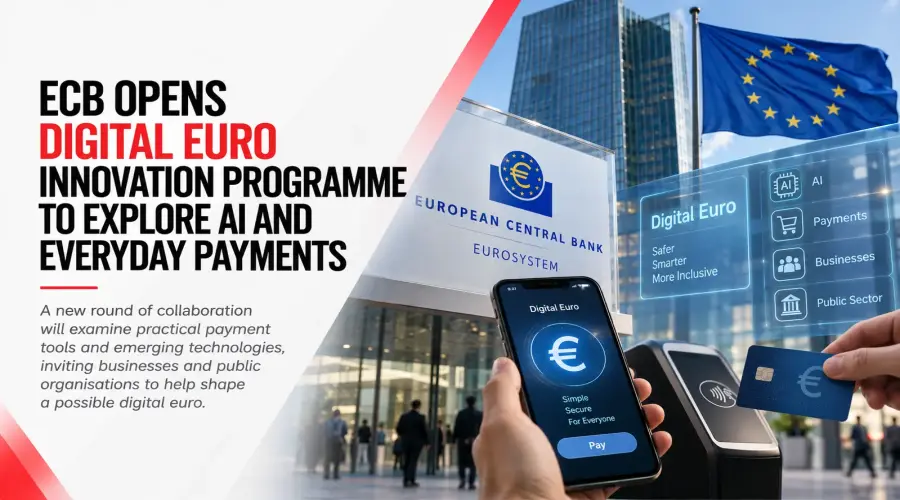
ECB Opens Digital Euro Innovation Programme to Explore AI and Everyday Payments
A new round of collaboration will examine practical payment tools and emerging technologies, inviting businesses and public organisations to help shape a possible digital euro.
Key Points
- The programme combines practical experimentation with research into future payment services.
- Areas of interest include digital receipts, shared payments, AI and public services.
- Applications close on November 9, 2026, at 17:00 CET, with activities planned for the first half of 2027.
The European Central Bank has opened another round of its digital euro innovation programme. Announced on September 28, the initiative invites payment providers, fintech firms, merchants and other organisations to contribute ideas ahead of any decision to introduce the currency.
Turning payment ideas into practical features
The digital euro innovation platform examines how a shared European payment foundation could support services developed by the market. Its earlier work involved around 70 participants. The broader ambition is to help useful payment solutions reach consumers and businesses across national borders, supported by common standards and interoperability.
One part of the new programme will test features such as receipts stored in payment apps, transactions funded by several people, and payments divided among recipients. It will also examine transfers triggered when agreed conditions are satisfied. Participants are expected to develop prototypes between January and June 2027.
A common payment foundation could give European businesses more room to build services around everyday needs.
Editorial perspectiveExploring AI and public-service payments
A separate research track will consider AI-assisted payments, interactions between AI agents and small-value transactions. Privacy, data protection and user control will form part of those discussions. Public-service applications, including transport and utility payments, will also be explored through workshops in the first half of 2027.
Innovation ahead of an issuance decision
The ECB presents the digital euro as a potential form of public money that could complement private payment products. Its intended features include offline use, resilience and broad euro-area availability. Collaboration with the market is meant to reveal which additional services could make that infrastructure useful in daily life.
The programme remains preparatory. A decision to issue a digital euro would come only after the relevant EU legislation is adopted.